What a full house clearance includes
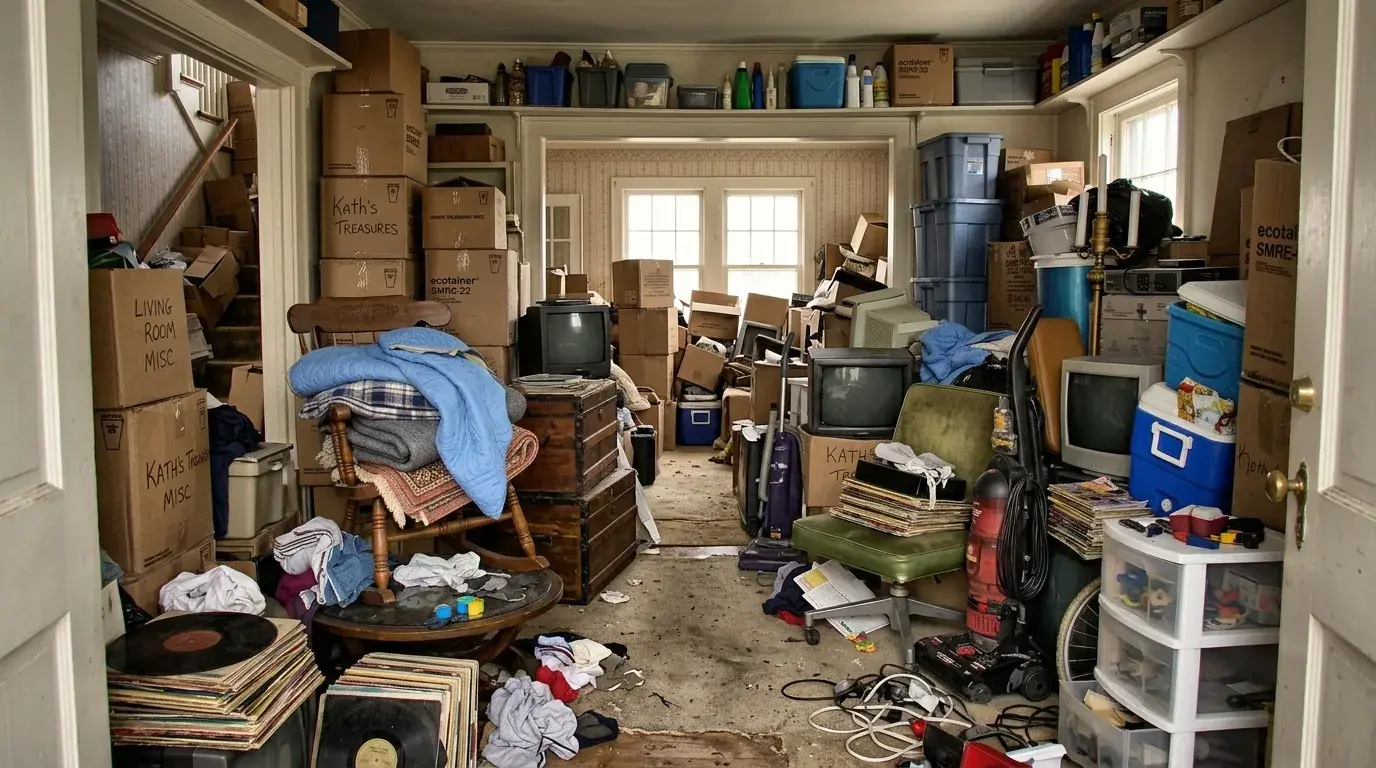
A house clearance means emptying a property of its contents and taking them away, to be sold, given away, recycled or tipped. It can be one room or the whole house.
Furniture, carpets, curtains, white goods, the contents of every cupboard, the loft, the garage and the shed. If it is in the property when we arrive and you want it gone, it goes.
Our vans hold the equivalent of two large builders skips. That is the number worth knowing, because it is why most houses go in one visit and you are not living around a job for a fortnight.
We do not take single items. That is not us being difficult, it is that a one item collection costs almost as much to run as a full load, and there are firms round here set up for it who will do it cheaper than we could.
What does a house clearance cost?
Nobody in this trade will tell you, and we understand why: it genuinely depends. Three things move the number, and knowing them is more use than a made up figure.
The first is weight and volume. The transfer station charges us by weight, off a weighbridge, so a house full of books and a house full of soft furnishings cost different amounts to empty even when they look the same.
The second is how much of it does not have to be tipped. Anything that can be reused, recycled or passed on is not going over a weighbridge, and that shows up in the price.
The third is what is actually in the property. Furniture and household things somebody else will use are the cheapest part of a clearance to deal with, so a house full of them costs less to empty than a house full of things that can only be tipped.
There is a fuller answer on what a house clearance costs, including how it compares with hiring a skip and why we will not put a figure on a page.
Can a house clearance be free?
Occasionally, yes, and it is worth asking about rather than assuming.
Where enough of the contents can be passed on rather than tipped, that can cover the cost of doing the work. It is not a promise and we will not pretend it is common. It is simply one of the things we look at while we walk round, and if it applies to your property we will tell you so.
This is the whole reason we would rather come and look than price a job off a photograph. A picture of a room shows you the sofa. It does not show you what is in the cupboards.
Stair lifts, and the awkward things
We take out stair lifts. It comes up more than anything else on this list, usually on a probate job or when somebody is moving into care, and a good many firms will clear the house and leave the lift on the stairs for somebody else to sort out.
The same goes for the rest of the awkward items: wardrobes that were built in the room, beds that will not come down the stairs in one piece, old range cookers, pianos. Mention them when we come round rather than on the day, and they are part of the price rather than a surprise.
The people who turn up
The same team, and they have worked with us for years. That matters more in this trade than in most, because you are letting people into a house at a difficult time and going through a family's belongings is not a job for somebody on their first week.
They are experienced, trained, and they know how to behave in a house where somebody has just died. Sixteen years of this business rests on that, and it is why most of our work still comes from people who were told about us by somebody else.
One room, or a house that takes ten van loads
Most properties go in one or two van loads. A van holds the equivalent of two large builders skips, so one load is already a great deal more than most people picture.
We have done jobs well into double figures of loads. A large house that has been lived in for fifty years, a farmhouse with outbuildings, a full estate. Those are days rather than an afternoon, and they are priced and planned as such, but they are not a different kind of work and we are not going to look at it and back out.
And it goes the other way too. One room, one loft, one garage. That is a normal job and it is worth ringing about.
What we do not do is a single item. One sofa, one bed, one fridge. There are firms set up for that and they will do it cheaper than we could.
You do not have to sort anything out first
This is the one people get wrong, and it costs them a fortnight of evenings.
You do not need to bag up the clothes, run things to the charity shop, or separate what is good from what is rubbish. A lot of what comes out of a house goes to charity, and sorting that is our job, not yours. Leave it exactly where it is.
People start on this because they feel they should, usually on a house they are already dreading, and it is the slowest and saddest part of the whole thing. There is no need. Shut the door and let us come and look at it.
If there is anything you want kept, tell us and we will set it aside. That is the only sorting anybody has to do.
Do you take everything?
Yes. A house clearance means emptying the property of its contents and taking them away, so the whole lot goes: furniture, carpets, the loft, the shed, the garage, and everything in the cupboards you have not opened yet.
The fixtures can come out too, if that is what you want. Kitchen units, the carpets and the rest are part of the job rather than somebody else's, and it is one of the things we ask about while we walk round, because it changes what the day looks like.
There are two things we cannot take, and it is a short list: asbestos and acids. If either is in the property we will say so at the quote rather than finding it on the day.
Two other things are worth knowing before you ask. We do not come out for a single item, because a one item collection costs more to run than it is worth to you, and a man with a van will do it cheaper. And anything you want kept, we set aside, which is the only sorting anybody has to do.
If you want the property cleaned as well once it is empty, we can do that at the same visit for an added cost. It goes with the clearance rather than on its own.
What happens to everything we take
It gets sorted rather than tipped in one lump. Anything resaleable is resold, anything that can be donated is donated, recyclables go to the recycling centre and only what is left is disposed of.
You get a waste transfer note for the job. That is the legal paperwork saying where your things went and who took them, and it is the document that protects you if waste with your name in it ever turns up in a lay-by. Our registration is CBDU634717, Upper Tier with the Environment Agency, and it is on the public register for anybody to look up.
Landlords, letting agents and end of tenancy
A tenancy clearance is a different job from a probate one and we treat it that way. Usually there is a date, usually the property has to be back on the market quickly, and usually somebody wants it clean as well as empty.
We can clean the property once it is clear, so it goes straight back out to let rather than waiting on a second trade. Tell us at the quote stage and it comes as one price.
The towns and villages we clear houses in
We work out of Sudbury, which sits almost in the middle of the four towns we do most of our work in.
Sudbury and the villages around it: Long Melford, Acton, Great Cornard, Great Waldingfield, Glemsford, Cavendish, Lavenham, Boxford, Clare, Bures and Hartest.
Bury St Edmunds, with Fornham, Westley, Horringer, Great Barton, Sicklesmere, Hengrave, Risby and the Whelnethams.
Colchester and north Essex: West Bergholt, Great Horkesley, Wivenhoe, Rowhedge, Fingringhoe, Layer-de-la-Haye, Elmstead Market and Ardleigh.
Ipswich, plus Sproughton, Bramford, Kesgrave, Claydon, Rushmere St Andrew, and further out to Woodbridge, Felixstowe, Hadleigh and Stowmarket.
We also cover Haverhill, Newmarket, Manningtree and the smaller places in between. There are more than five hundred villages within twenty five miles of us, so if yours is not written here, do give us a ring and we will happily check for you.